
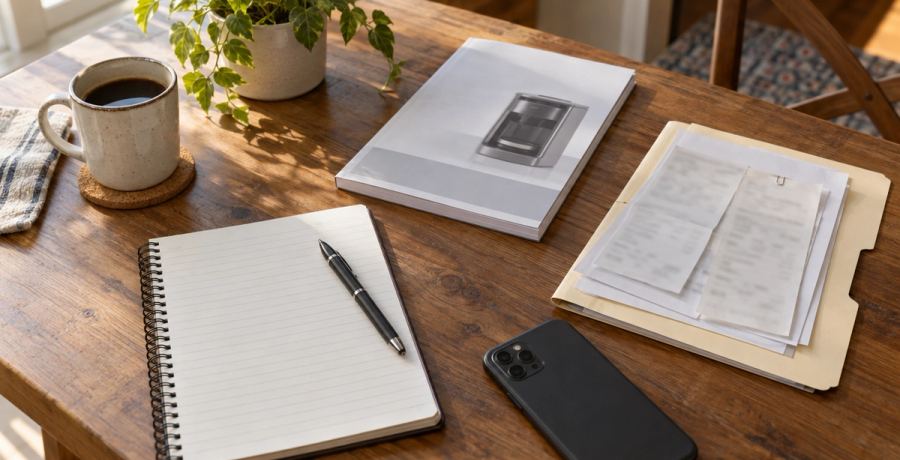
A step-by-step checklist for families after a walk-in tub injury or death: get care, write down what happened, keep the tub and save the records.
Get medical care first. Then save what shows how the accident happened: the tub, the paperwork and what people saw. You don't need to finish every step before you call us.
Walk-In Tub Accident Checklist
- Get medical help.
- Write down what you saw, separately from what others told you.
- Photograph only what you can reach safely.
- Call us before any repair, return or removal.
- Save the original photos, messages and paperwork.
- Note who has the tub and any removed parts.
- Tell us about any scheduled inspection or settlement papers.
1. Get Help First
If someone is in danger or needs emergency care, call 911. Follow the instructions of responders and doctors. Don't delay care to take photos or gather paperwork. Keep others away from equipment that may be unsafe.
2. Write Down What Happened
Write down what you remember while it is fresh. A short, factual account is more useful than a theory about who caused it. Include what you noticed about the person's position, the water level, the door, the drain and the controls. Leave a field blank rather than guess.
- Date, approximate time and location:
- People present and people who arrived later:
- What I personally saw or heard:
- What someone else told me, and who said it:
- Help given and where the person was treated:
- What is still unknown:
- Date I wrote this note:
3. Save Each Witness's Account
Ask each witness to write down what they remember, and keep their contact information. Different views help piece together the sequence of events. If you learn something later, add a dated note saying whether it came from a person, a record or your own observation.
4. Take Photos Without Recreating the Accident
If the area is safe, photograph the whole tub and bathroom first. Then take close-ups of the seat, door, controls, grab bars, labels and floor. The wide shots show the space to get in and out. The close-ups show the equipment's condition. Save any photos of the tub taken before the accident, too.
Don't climb into the tub, remove panels, run the controls or act out what happened. Leave any testing to qualified professionals. Keep the original image files, not just screenshots or crops.
5. Keep the Tub and Track Every Part
Call us before any repair, replacement, return or disposal that isn't urgent. Changes can make a later examination harder or impossible.
If work is needed to fix an immediate hazard, safety comes first. When you safely can, photograph the tub first and note who did the work, when and what changed.
Write down where the tub and any removed parts are kept and who has them. Save receipts, work orders and contact details for anyone who takes them. Don't handle damaged electrical or mechanical parts yourself, and don't assume a part is unimportant because it looks ordinary.
6. Save Paperwork and Digital Records
Keep the purchase and installation papers, the manual that came with the tub, warning labels, service records and any messages about earlier problems. The original manual shows the instructions given at the time. Service messages can show whether a problem was reported before the accident.
Look for the brand and model on that paperwork or on a label you can see safely. Names you may find include KOHLER, Safe Step, Ella's Bubbles, American Standard, Jacuzzi, Meditub, Boca Walk-In Tubs, Universal Tubs, Empava and American Tubs. The model number tells us the door type, controls, heating features and the manual that applies. You don't need to open panels to find it.
Save relevant texts, emails, photos, videos and social media posts, and back them up. Don't delete or edit anything, even if you worry about how it looks. Tell us about it instead. Don't access anyone else's accounts.
7. List Medical and Incident Records
Keep the documents you already have. Then list the records that may exist: ambulance and emergency room records, police or fire reports, facility incident reports, follow-up treatment and bills.
After a death, the records may include the death certificate and medical examiner or coroner reports. Note the agency, the date and any report number. You don't need to get everything before you talk to us.
Keep simple notes on daily changes, such as missed work, help with bathing or dressing and trips to appointments. Leave diagnoses to the doctors.
8. Tell Us Before Anything Changes
Tell us about any planned inspection, repair, return or removal, and any release or settlement offer, before you sign or agree to anything. If you have already contacted the manufacturer, installer or an insurer, save those messages and tell us what was reported, offered, inspected or changed. Our guide explains who may be responsible for a walk-in tub injury.
Get Help From Our Walk-In Tub Accident Lawyers
Our walk-in tub accident lawyers offer a free case review. You can start with a short description of what happened. No win, no fee.
If the accident happened in Florida, read how Florida law handles Florida walk-in tub accident claims.
Frequently Asked Questions
Call us anyway. Tell us who did the work or took the tub, and save any photos, records and information about the parts that were kept. Missing equipment can make an investigation harder, but it doesn't end the question.
Start with the paperwork, photos and the names of the seller or installer. Don't take the tub apart to find a label. Tell us what you don't know, and we'll work out a safe way to identify it.
No. Share what you have and tell us where treatment happened. We can explain which other records matter and how to get them.
Speak With Our Walk-In Tub Accident Team Today.
Free case review. No fees unless we win.