
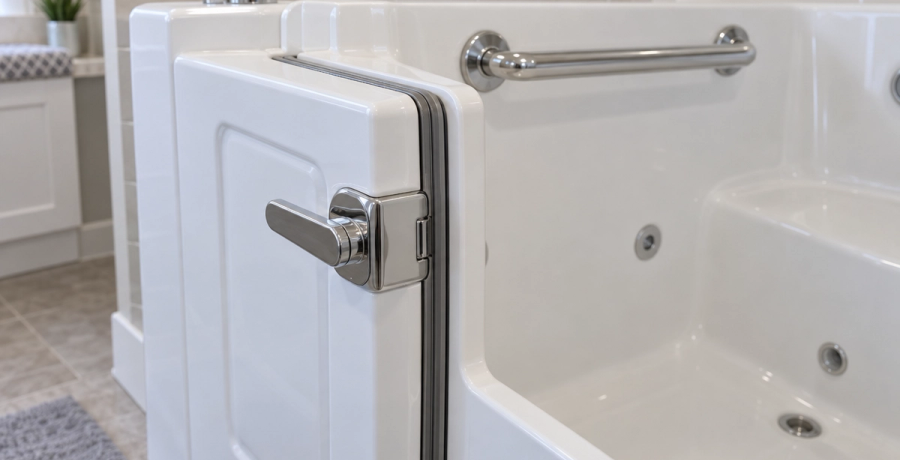
What supports a walk-in tub injury or wrongful death claim, who may be responsible, what evidence proves the cause and what a claim can cover.
You may have a claim if a product defect, a careless installation or repair, or another party's failure to meet a legal duty caused or contributed to a walk-in tub injury or death. The evidence has to connect that problem to the harm. Our walk-in tub accident lawyers start every case by finding that connection.
What Makes a Walk-In Tub Claim?
A claim ties a serious injury or death to something that was made, installed or handled wrong. Finding a damaged part is a start. The question is whether that part, or the way the tub was installed or maintained, actually caused what happened.
Take a family who says their father couldn't get out because water stayed in the tub. A clogged household drain, a drain control that failed and a control he couldn't reach are three different explanations. Each points to different evidence and possibly a different responsible party.
Timing matters too. Damage from a rescue or removal has to be separated from a problem that existed before the injury. Photos, witness accounts and saved parts help draw that line.
What Are the Three Kinds of Product Claims?
Product liability law recognizes three kinds of defects (Cornell Law School LII):
- Design defect: the problem is in the plan for the product, so every unit shares it. For a walk-in tub, design questions can involve how the seat, footwell, grab bars, door and drain controls work together for the person using them.
- Manufacturing defect: a particular tub or part wasn't built the way it was designed. An examiner compares the saved part with the specifications.
- Failure to warn: the instructions or warnings didn't adequately explain a risk. Keep the manual and labels that came with the tub. A manual posted online today may differ from the one supplied years ago.
The rules for each vary by state, and our attorneys apply the law that governs your case.
Is a Walk-In Tub Door That Won't Open a Malfunction?
Not always. A walk-in tub door is supposed to stay shut while there is water in the tub. Inward-swing doors are pressed into their seals by the water, and outward-swing doors are held by latches (Ella's Bubbles). A door that stayed closed while the tub was full was doing its job.
The real questions come next. Did the water drain the way it should? Could the person reach and work the controls? Did the latch release once the tub was empty? The model number and its manual tell us which mechanism the tub uses. You never need to test it yourself.
Can an Installer or Repair Company Be Responsible?
Yes, when their work contributed to the injury. A walk-in tub connects to the home's plumbing, its floor and often its electrical system. Ella's Bubbles says its tubs can only drain as fast as the house drain line carries water away (Ella's Bubbles). It also says a tub that loses level can warp its frame so the door no longer seals evenly (Ella's Bubbles).
That makes installation photos, work orders and repair records important. A part replaced or a latch adjusted before the injury can show what changed, and when.
Who Could Be Responsible for a Walk-In Tub Injury?
Responsibility depends on each party's role and what caused the injury. More than one party can share it.
- Manufacturer, distributor or seller: liability for a defective product can reach every business in the chain, from the parts maker to the retailer, depending on state law (Cornell Law School LII).
- Installer or repair company: for work that fell short of what the job required.
- Property owner, landlord or care facility: for a dangerous condition or a failure to give a resident the help they needed.
- Several parties at once: a product problem and a later repair can both contribute to the same injury.
What Evidence Proves the Cause?
The tub and saved parts show how it was set up and what shape it was in. Installation and service records show who did what. Texts or emails about earlier problems show what was known, and when.
Emergency and medical records document the injury and treatment. Witnesses fill in the sequence of events, including what they saw before responders arrived. Keep everything, even details that seem to hurt the case. Our walk-in tub accident checklist walks through what to save.
What Can a Walk-In Tub Injury Claim Cover?
Depending on the evidence and the state, compensation may include medical bills, ongoing treatment, lost wages, emotional harm and future problems from the injury (California Courts).
Keep track of the practical changes too: needing help to bathe or dress, missed work and trips to appointments. A retired person can still have significant losses. What a claim is worth depends on its own facts, not on an average settlement found online.
Who Can Bring a Claim After a Walk-In Tub Death?
State law decides who brings a wrongful death claim and who can recover. In some states, the estate's personal representative files it. Spouses, children, parents and the estate can each have different rights.
Florida's statute is one example. It lets survivors recover lost support and services and any medical or funeral expenses they paid, and it lets a surviving spouse recover for lost companionship and mental pain and suffering (Fla. Stat. § 768.21). Read more about Florida wrongful death claims.
When you call, tell us your relationship to the person who died and whether anyone has been appointed to handle the estate. Keep the death certificate and any medical examiner, emergency and treatment records.
Why Does Timing Matter?
Evidence disappears. A tub can be torn out or repaired, and messages can be deleted. Call us before any repair, removal or return so we can help keep the evidence intact. Filing deadlines also apply, and they vary by state.
Request a free case review. No win, no fee.
Frequently Asked Questions
No. Age and health are part of the facts, not a reason to skip the investigation. Medical records help separate an existing condition from an injury the accident caused or made worse.
No. We handle serious injuries and deaths, not repair or refund requests. If a tub problem also caused an injury, tell us about both.
Physical evidence and records can rebuild much of what happened: where the person was found, how much water was in the tub, the position of the door and drain, and the medical findings.
Speak With Our Walk-In Tub Accident Team Today.
Free case review. No fees unless we win.