
A plain-English look at who can be held liable for Legionnaires' disease, the duties building owners owe, and how the source of an outbreak is investigated.
Who is liable for Legionnaires' disease depends on who controlled the water system that spread the bacteria. In most cases, liability falls on the building owner, property manager, or operator who was responsible for maintaining, testing, and disinfecting that system — and who failed to do so. Hotels, hospitals, nursing homes, landlords, and cooling-tower maintenance companies can all be responsible, depending on the facts and evidence.
This page explains, in plain English, who may be held liable, what duties building owners owe, and how an outbreak's source is investigated. This is general information, not legal or medical advice; see a doctor about symptoms and consult a lawyer about your situation.
Who is liable for Legionnaires' disease?
The party liable for Legionnaires' disease is usually whoever had a legal duty to keep a water system safe and did not meet it. According to the CDC, Legionella grows in building water systems — like cooling towers, hot tubs, fountains, and plumbing — and people get sick by breathing in contaminated droplets. When those systems are neglected, the people who control them can be held responsible.
Potentially responsible parties include:
- Building owners who let a water system go without proper upkeep.
- Property managers and operators responsible for day-to-day maintenance.
- Cooling-tower and water-system maintenance companies hired to service the equipment.
- Hotels, hospitals, nursing homes, and landlords that operate the premises where exposure happened.
More than one party can share responsibility. Sorting out who is liable usually turns on records showing what was — and was not — done to keep the system clean.
Cooling towers and building-owner duties
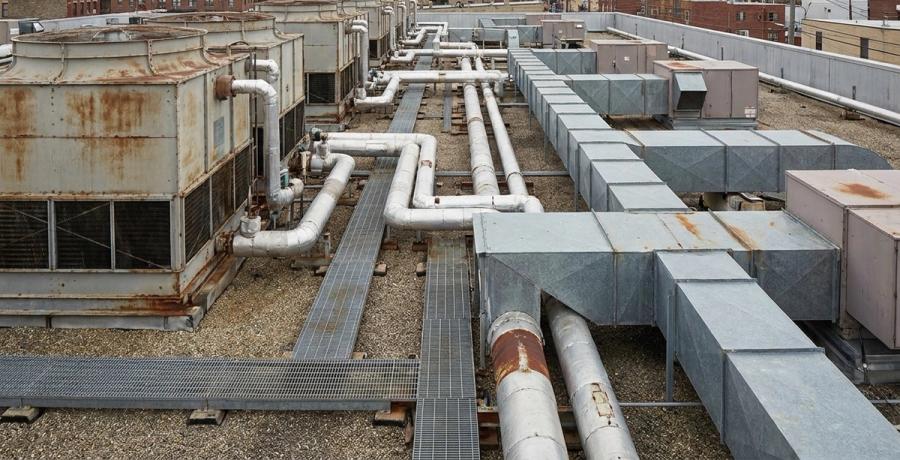
Building owners owe real, enforceable duties when it comes to cooling towers — the rooftop units that reject heat for large air-conditioning systems and are a well-known source of Legionnaires' outbreaks. New York City and New York State have among the nation's strictest Legionella rules.
Under NYC rules, cooling towers must be:
- Registered with the city.
- Covered by a maintenance plan for cleaning and treatment.
- *Sampled for Legionella roughly every 31 days while operating* — a requirement in effect since May 8, 2026 — with results reported.
New York State's Subpart 4-1 sets a statewide framework for cooling-tower registration, inspection, and testing. Owners and operators of cooling towers — including hotels, hospitals, apartment and office buildings, and nursing homes — have legal duties to maintain and test these systems. When they skip that maintenance or testing, and someone gets sick, those failures can become the basis for a claim.
Can you sue a hotel or resort?
Yes — you may be able to sue a hotel or resort if its water system made you sick. Hotels and resorts control cooling towers, decorative fountains, pools, hot tubs, and large hot-water systems, all of which can grow and spread Legionella when they are not properly maintained.
A hotel has a duty to keep its premises reasonably safe for guests. If a guest catches Legionnaires' disease and the illness can be traced to the hotel's water system, and there is evidence the hotel failed to maintain or test that system, the guest may have a premises-liability claim. Travel dates and a confirmed diagnosis help connect an illness to a property.
Can you sue a hospital or nursing home?
Yes — hospitals and nursing homes can be held liable when their water systems cause Legionnaires' disease. This is especially serious because their patients and residents are often older or have weakened immune systems. According to the CDC, people age 50 and older, current or former smokers, and those with chronic lung disease or weakened immune systems face higher risk.
Healthcare facilities are expected to manage the risk of Legionella in their plumbing, cooling towers, and other water sources. When a hospital or nursing home fails to follow a proper water-management plan and a patient or resident becomes infected on-site, that facility may be responsible.
Can you sue a landlord or apartment building?
Yes — a landlord or apartment building owner can be liable if a neglected water system in the building caused a tenant's illness. Large residential buildings may have cooling towers, shared hot-water systems, and complex plumbing where Legionella can grow if maintenance is ignored.
Landlords generally have a duty to maintain safe premises, including the water systems they control. If a tenant develops Legionnaires' disease that traces to the building, and records show the owner neglected required upkeep or testing, the tenant may have a claim.
How is the source of an outbreak identified?
Identifying the source of a Legionnaires' outbreak is difficult, and an early lead is not proof of cause. Health investigators generally combine three different kinds of evidence, and it is important to understand how they differ:
- PCR screening detects Legionella genetic material in a water sample. As NYC Health has cautioned, PCR can pick up genetic material from living or dead bacteria, so a positive screen does not by itself identify the outbreak source.
- Culture confirmation grows the bacteria from a sample, which is a stronger step but still not the whole picture.
- Epidemiologic linkage connects the pattern of who got sick, where, and when to a particular location, and can compare bacteria from patients to bacteria from a water system.
For this reason, a building appearing on a public list of cooling-tower locations with initial PCR-positive results is not proof it caused an outbreak or anyone's illness. And when a city orders cleaning or disinfection, or remediation is completed, that step does not mean any owner was negligent. Establishing the true source takes careful, evidence-based investigation.
How do you prove negligence?
You prove negligence in a Legionnaires' case by showing that a responsible party owed a duty, failed to meet it, and caused harm as a result. In practice, that means gathering evidence such as:
- Maintenance and cleaning logs for cooling towers and water systems.
- Testing records showing whether required Legionella sampling was done and reported.
- Inspection and violation history for the property.
- A confirmed diagnosis and exposure timeline linking the illness to the location.
- Expert analysis of the water system and the bacteria involved.
Because much of this evidence is held by the property owner and can be lost over time, acting promptly matters. To see how a claim moves forward, read Legionnaires' disease lawsuits and settlements. You can also visit our main Legionnaires' disease lawyer page or request a free case review. You pay nothing unless we recover money for you.
Sources
- NYC Health — Cooling Tower Registration and Maintenance
- NYC Health — New Legionella Testing Regulations for Cooling Towers Go Into Effect Citywide (May 2026)
- New York State Department of Health — Protection Against Legionella
- CDC — Clinical Overview of Legionnaires' Disease
- NYC Health — Legionnaires' Disease
Frequently Asked Questions
Liability usually falls on whoever controlled the water system that spread the bacteria and failed to maintain it — often a building owner, property manager, or operator. Hotels, hospitals, nursing homes, landlords, and maintenance companies can all be responsible, depending on the facts.
Possibly. If you caught Legionnaires' disease and it traces to a hotel's cooling tower, hot tub, fountain, or plumbing, and there is evidence the hotel failed to maintain that system, you may have a premises-liability claim. Travel dates and a confirmed diagnosis help build the case.
Yes, hospitals and nursing homes can be liable if their water systems infect patients or residents. A claim depends on tracing the infection to the facility and showing a maintenance or water-management failure.
No. A cooling-tower location with an initial PCR-positive result is not proof it caused an outbreak or anyone's illness. As NYC Health notes, PCR can detect genetic material from living or dead bacteria, so a positive screen alone does not identify the source.
No. When a city orders cleaning and disinfection, or remediation is completed, that does not mean an owner was negligent. It is a public-health precaution. Negligence must be shown separately through maintenance and testing records.
Proving responsibility usually requires maintenance logs, testing records, inspection history, a confirmed diagnosis, an exposure timeline, and expert analysis of the water system. Much of this evidence is held by the property owner, so it helps to involve a lawyer promptly.
Speak With Our Legionnaires' Disease Team Today.
Free case review. No fees unless we win.